
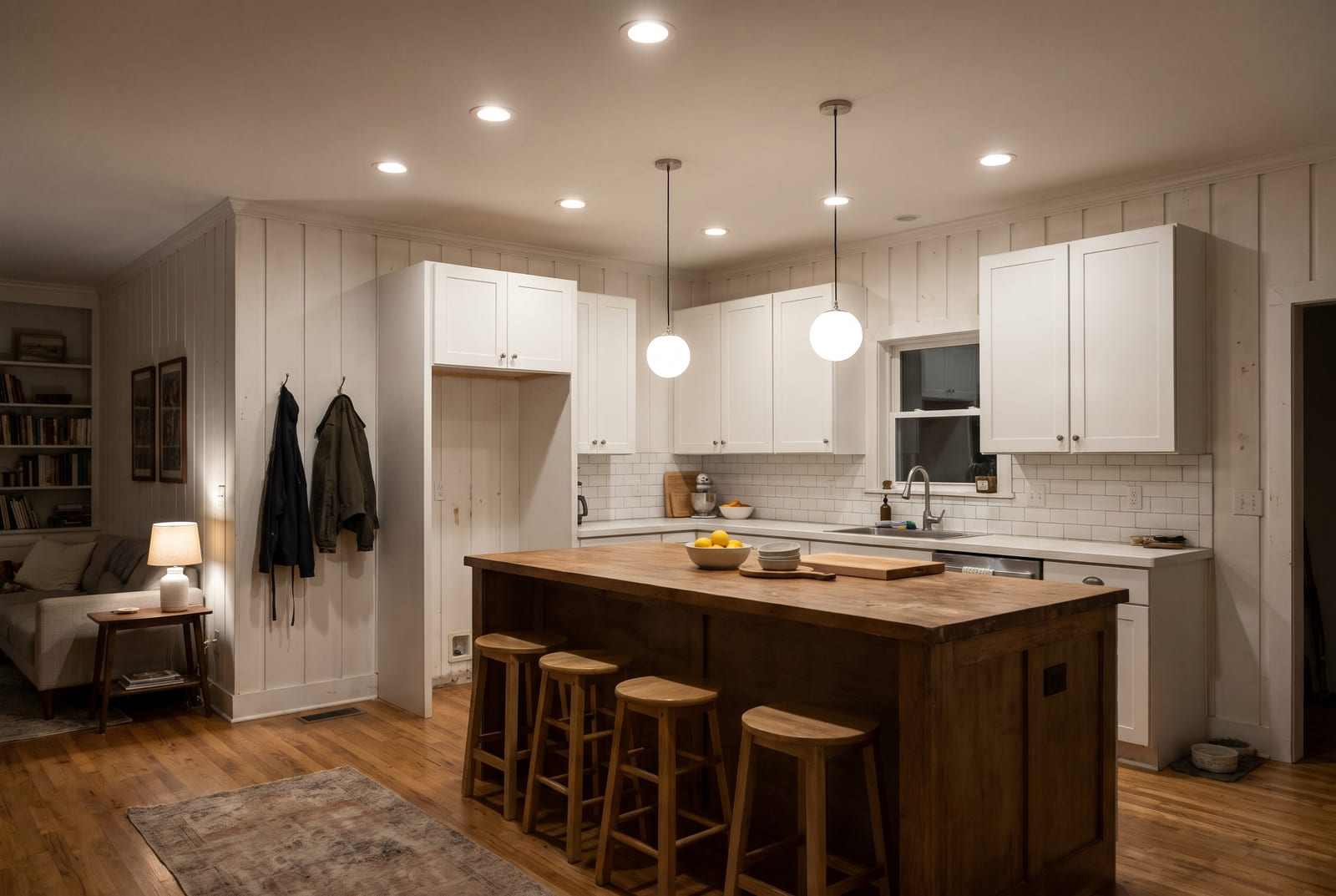
Lighting & Wiring
Lights, fans, outlets, switches and the wire between them: new work, replacements and repairs in houses, condos and commercial spaces.
A fixture is only as good as the box, the splice and the circuit behind it. We look at all three before anything new goes up.
Common Jobs
Scroll right for the other columns.
| Job | When it is needed | Good to know |
|---|---|---|
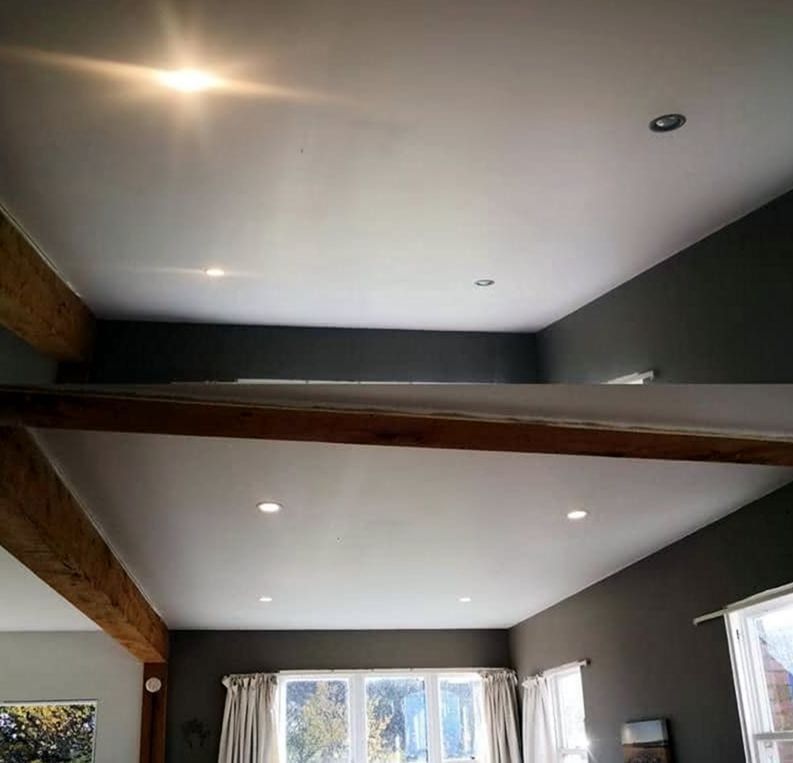
| Recessed lighting | Dark kitchens and hallways, low ceilings | Insulation-rated housings or wafer lights; spacing matters more than the number of cans |
| Outdoor and landscape lighting | Dark walks, steps and side yards | Low-voltage runs need a transformer sized for all the fixtures; near the coast, brass outlasts painted aluminum |
| Exterior and security lighting | Driveways, gates and back doors | Motion sensors want a clear view and no hot exhaust in front of them |
| Outlet and switch replacement | Loose plugs, warm plates, buzzing | Worn contacts heat up; tamper-resistant outlets are the current standard in homes |
| GFCI and AFCI protection | Kitchens, baths, garages, outdoors; living spaces for AFCI | Can often be done at the breaker, which protects the whole circuit |
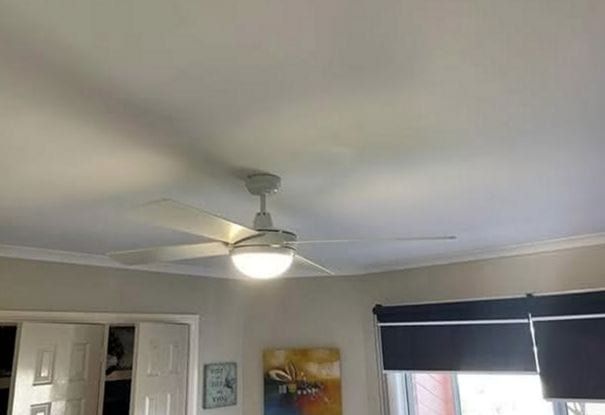
| Ceiling fans | A light box where a fan is wanted | The box must be rated to hold a fan; separate switches need an extra wire |
| Partial or full rewiring | Brittle insulation, no ground, repeated faults | Often done room by room, alongside a remodel |
Planning Recessed Light
Start from what the light is for. Counters and desks want light in front of the person standing there, a hallway wants an even line, a living room wants layers that can be dimmed separately.
Two circuits with dimmers do more for a room than extra fixtures. Joists, ducts and insulation then decide where a can fits, so the layout is settled with a look above the ceiling.
Signs Your Wiring Needs Attention
- Outlets or switch plates that feel warm
- Buzzing or crackling from a switch, an outlet or the panel
- Two-prong outlets, or three-prong outlets that test as ungrounded
- Discolored plates or a smell of hot plastic
- Lights that flicker when something else turns on
- Extension cords used as permanent wiring
Heat, a burnt smell or sparks should not wait for an appointment. Turn the circuit off if you can do it safely and treat it as an electrical emergency.
Outdoors, Tubs and Low Voltage
Hot tubs and spas need their own GFCI-protected circuit, a disconnect within sight and bonding of the metal around the water. Landscape lights, gate openers and patio outlets call for wire and boxes made for the weather. Inside the walls we also run telephone, TV and network cable, kept apart from power so it stays quiet.
Older Wiring and Dimmers
My house still has its original wiring. Is it a problem?
It depends on the kind and its condition. Knob-and-tube wiring in early houses has no ground and dislikes insulation packed around it. Cloth-covered cable from the 1940s and 1950s can be brittle at every box. Aluminum branch wiring from the late 1960s and early 1970s is sound in the wall but needs the right connectors at each device.
Why do my LED lights flicker on the dimmer?
Usually the dimmer was made for incandescent bulbs and sees too little load, or the lamp is not dimmable. Matching a dimmer listed for LED with compatible lamps fixes most cases. If lights flicker on several circuits at once, look past the dimmer to a connection.
Do I have to rewire everything at once?
Rarely. The usual order is the circuits that show faults, then kitchens and baths, then the rest as rooms are opened for other work.
What does the energy code ask of new lights?
California’s energy code expects high-efficacy lighting in homes and, in many rooms, a dimmer or a sensor. Most LED fixtures sold here meet it; a few imported ones do not, so check before buying a whole set.

Make a list of what you would like changed, room by room, and get a quote on all of it together.