
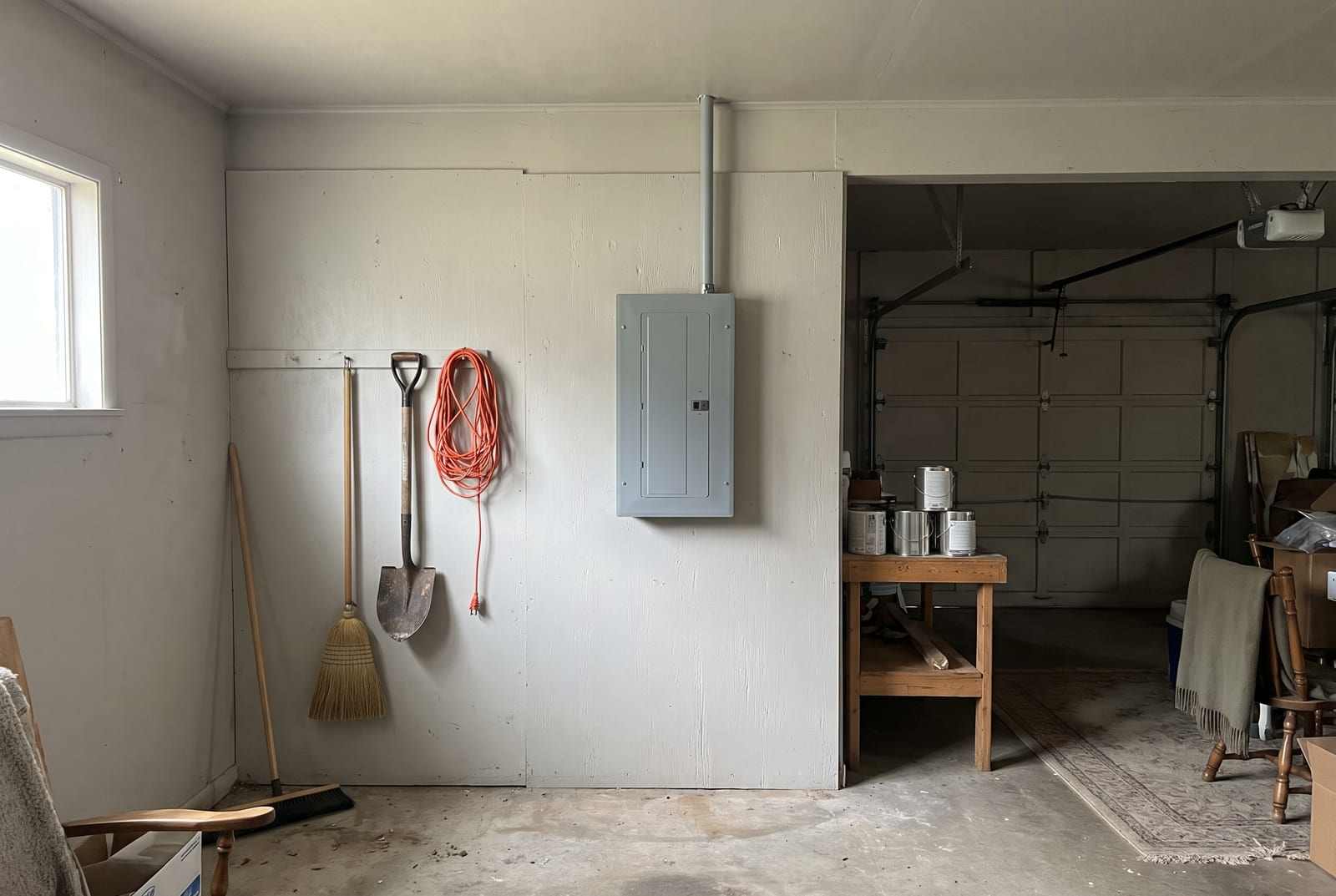
Panel Upgrades
The panel takes the utility’s power and divides it into circuits, each behind its own breaker. It is worth replacing when it is damaged, out of space or too small for what the building now runs.
Some jobs are a new panel at the same rating. Others raise the service itself, which also involves the meter, the service wires and SDG&E. Knowing which one you need is the first question to settle.
Signs and What They Suggest
Scroll right for the other columns.
| Sign | What it may indicate | Next step |
|---|---|---|
| Lights dim or flicker when a large appliance starts | A loose connection, a heavily loaded circuit or an undersized service | Note which appliance and which rooms; have the connections and the load checked |
| A breaker trips again and again | Overload, short circuit, ground fault or a worn breaker | Stop resetting it, leave it off and have the circuit traced |
| The panel cover is warm, buzzes or smells burnt | A loose or overheated connection | Keep clear of it and call the same day |
| No space for new breakers, or two wires under one screw | A full panel; doubled wires are a common code correction | Ask about a subpanel or a larger panel |
| An older panel such as Federal Pacific Stab-Lok or Zinsco | Breakers known for not tripping as they should | Plan a replacement rather than a repair |
| Fuses, or a main breaker of 60 amps | A service sized for far fewer appliances | Get a load calculation before adding anything |
How Much Service Might You Need?
Choose the size of the home and tick what it has now or will have soon.
The range shows here once you press the button.
The figure is a starting point. The final size comes from a load calculation made at the assessment, using the appliances’ own ratings.
How a Panel Change Goes
The old panel is documented circuit by circuit, the power is shut off, and the wires are moved to the new enclosure onto breakers matched to their size. Grounding and bonding are brought up to current code, which older houses often need. In coastal neighborhoods the enclosure’s rating matters too: salt air is hard on exterior panels, and many San Diego panels sit outdoors on a side wall.
Before we call the job finished, circuits are tested under load, connections and fixtures are checked, and the panel is labeled so the next electrician can follow it. If you are still weighing a new panel against a subpanel or load management, compare the options first.
Replacement, Permits and Time Without Power
When does a panel need replacing?
When it is damaged, rusted, overheated or of a type with a poor safety record, or when it has no room and no capacity left. Age alone is not the reason. A thirty-year-old panel with sound connections may only need a breaker, while a newer one that took water may need to go.
Is a permit needed?
Yes. A panel replacement or a service upgrade needs an electrical permit and an inspection from the city or, in unincorporated areas, the county. The inspector looks at the panel, the breakers, the grounding and the working space in front of it.
How long is the power off?
Expect to be without power for a good part of the day the panel is changed. When the utility has to disconnect and reconnect its wires, the timing also depends on its schedule. Plan around refrigerators, medical equipment, home offices and gate openers.
Will a bigger panel lower my bill?
No. It gives the house room for more load; it does not change what each appliance uses.
Before You Ask
Helpful to have ready: the main breaker’s number, a list of large appliances, and anything planned for the next few years. A panel job follows the same steps as any other, from the first look to the last test: How We Work.